
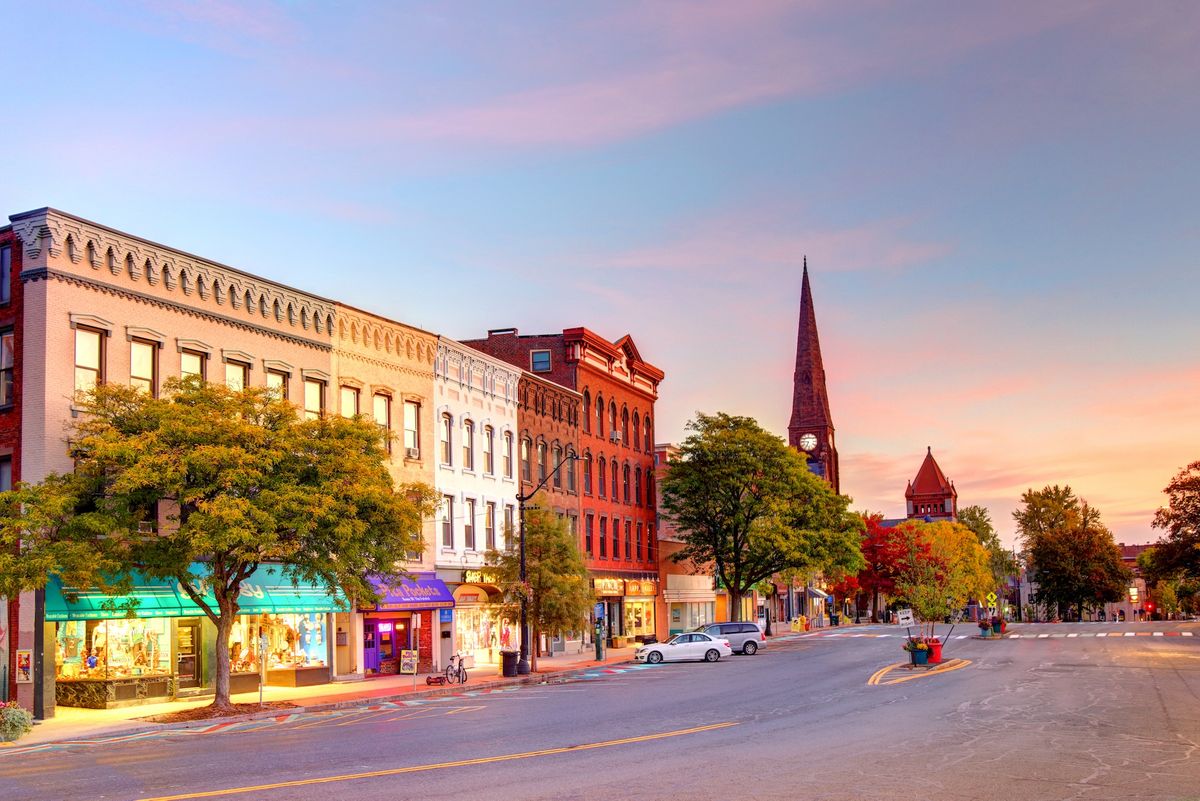
There is a tendency to talk about Main Street as if it’s some bygone ideal.
We picture the storefront, the local café, the independent grocer, the hardware store, the restaurant where people know each other, the business owner sweeping the sidewalk before opening the door. For some, that image reads as sentimental. For others, it feels politically quaint or economically small compared to the scale of national brands, digital platforms, venture capital, and global supply chains.
But Main Street is not nostalgia. Main Street is infrastructure.
It is civic infrastructure. Economic infrastructure. Social infrastructure. Cultural infrastructure. It is one of the places where people still encounter each other outside of algorithms, institutions, and private homes. It is where trust is built in public. It is where commerce and community still have the chance to meet.
That matters more than most of us realize.
A strong local economy is not only measured by sales receipts, storefront occupancy, or job creation, (although those numbers matter.) It is also measured by whether people have somewhere to gather, whether independent business owners can build real wealth, whether neighbors have reasons to know each other, whether a downtown feels alive after 5 p.m., whether young people can imagine a future in their own community, and whether civic life has enough connective tissue to survive economic, environmental, or political stress.
The best Main Streets don’t happen by accident. They are built through decisions, relationships, stewardship, and sustained investment. Research and practice in the field of downtown revitalization and rural economic recovery have shown that Main Streets can play an important role in economic, social, civic, and built-environment outcomes, especially when communities invest in local capacity and coordinated support. Brookings and the National Main Street Center have studied how rural downtowns can support long-term resilience when local leaders, business owners, and civic institutions work from a shared understanding of place.
That word, resilience, is important. The U.S. Economic Development Administration describes economic resilience as the ability of a local or regional economy to anticipate risks, understand how shocks may affect key economic assets, and build responsive capacity. In plain language, communities need the relationships, systems, and communication channels to know what is happening and respond together.
Main Street is a place where that capacity either exists or doesn’t.
If a downtown is only treated as a collection of buildings, businesses, or traffic patterns, its deeper function is easy to miss. A downtown is also a network. It holds business owners, landlords, residents, municipal staff, chamber leaders, cultural workers, lenders, nonprofit partners, customers, visitors, and community leaders. Some of that network is visible, though much of it is informal: conversations at counters, introductions made over coffee, a shop owner recommending another shop, a local official hearing what is changing on the ground before the data catches up.
That analog network has economic value. It also has civic value.
The National Civic League uses the idea of civic capital to describe a community’s capacity to solve problems and thrive. Civic capital is not only found in wealthy or highly resourced places. It grows where residents, businesses, nonprofits, and local institutions are meaningfully engaged in the life of the community.
Main Street can be one of the most accessible expressions of that civic capital. It is where people participate in public life without always naming it as such. They show up for a farmer’s market, buy from a neighbor, attend a street festival, linger after a meeting, join a committee, argue about parking, volunteer for an event, support a fundraiser, or decide that a vacant storefront should become something better. These may seem like small gestures. Together, they are how a community practices itself into being.
That does not mean Main Street should be romanticized.
Local business ownership is difficult. Many independent operators are overextended, undercapitalized, and trying to make decisions with incomplete information. They are expected to be brand strategists, financial managers, marketers, employers, customer service experts, technologists, and community ambassadors, often while still doing the daily work of the business itself.
Downtown organizations, chambers, municipalities, and economic development partners face their own constraints. They may have strong ideas but limited staff. They may be responsible for business support, district promotion, grant administration, infrastructure coordination, public communication, placemaking, and stakeholder engagement all at once. The work is often urgent, visible, and politically complicated.
So the answer is not simply to tell people to “shop local.” The answer is to build better local systems.
That means helping business owners understand their numbers, not just their social media reach. It means connecting marketing strategy to financial reality. It means giving downtowns a story that is bigger than a calendar of events. It means equipping chambers and business associations to offer practical support, not just networking. It means helping municipalities translate economic development goals into visible, usable, community-facing work.
It means treating small-business growth and community development as interconnected disciplines.
Main Street America’s national network demonstrates that coordinated local effort can create measurable results. In 2024, Main Street America programs generated $7.65 billion in local reinvestment, helped open 6,324 new businesses, facilitated 33,835 new jobs, rehabilitated 10,126 historic buildings, and logged 1.9 million volunteer hours. Those numbers matter because they show that placemaking, small business support, historic preservation, and local organizing are not soft work. They are economic work.
But the numbers are only part of the story.
Behind every reinvested dollar is a decision to believe a place is worth building. Behind every new business is a person taking a risk. Behind every rehabilitated building is a refusal to let the built environment continue to signal decline. Behind every volunteer hour is someone choosing participation over resignation.
That is why Main Street matters.
It is one of the few remaining arenas where business strategy, public life, cultural identity, and local imagination can synergize. It is where an entrepreneur’s ambition can become part of a community’s future. It is where economic development can become more than recruitment, incentives, or ribbon cuttings. It is where growth can be measured not only by expansion, but by durability, belonging, ownership, and shared possibility.
Of course, none of this happens without execution.
Harvard Business Review has written extensively about the difficulty organizations face when moving from strategy into implementation, and anyone who has worked with small businesses or civic organizations knows that the gap between a good idea and a changed reality is often where momentum gets lost.
A town may have a vision. A business owner may have an idea. A chamber may have a program. A downtown association may have a plan. A municipality may have funding. But without alignment, communication, training, financial visibility, implementation capacity, and ongoing support, good intentions can remain suspended in conversation.
That is the space Main + Method is built to occupy.
We believe local communities are not relics. They are living systems. They need strategy, but they also need stewardship. They need inspiration, but they also need bookkeeping, marketing systems, dashboards, training, coaching, and practical follow-through. They need people who can see the relationship between the brand and the budget, the storefront and the street, the owner and the ecosystem, the idea and the method.
Main Street is not nostalgia.
It is where the future can become more human, more local, more durable, and more generative.
But only if we build it that way.